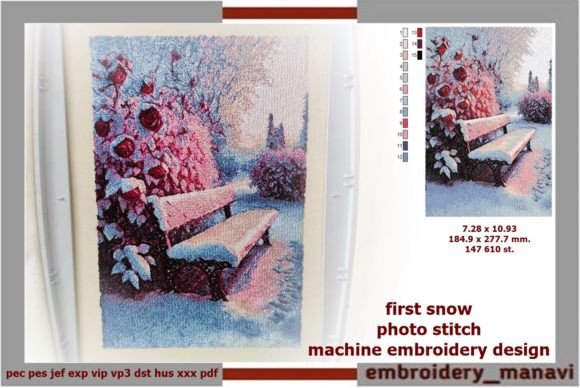
Photo Stitch First Snow Review: A Winter Embroidery Design for Real Projects
As an experienced embroidery designer and product reviewer, I always approach a new machine embroidery design with both curiosity and caution. Photo Stitch First Snow caught my attention not just because of its seasonal charm but also because it’s positioned as a versatile option for home decor and apparel. Let me walk you through how this design stands up in real-world applications.
First Impressions and Design Personality
The moment I unzipped the digital file for Photo Stitch First Snow, I was drawn to its soft, nostalgic feel. The imagery suggests a quiet morning after a fresh snowfall—gentle drifts, bare trees, and a sense of peace. This isn’t your typical geometric or bold winter pattern; instead, it leans into a more artistic and subtle aesthetic. The layout is balanced yet open, allowing for flexibility in placement and scale.
What stood out most was the blend of detail and simplicity. There are enough elements to convey a story without overwhelming the viewer. For someone who wants to create something meaningful rather than just decorative, this design feels like a good fit. It works especially well for projects that aim to evoke warmth, memory, or a personal touch.
Fitting Into Real-Life Embroidery Projects
I tested Photo Stitch First Snow on a few common craft items to see how it would perform in different contexts:
- Tote Bag Design: When applied to a cotton canvas tote bag, the design looked elegant and grounded. The gentle lines and moderate stitch density didn’t overpower the fabric, which is key when working with sturdy materials. The result felt like a high-quality handmade product, perfect for holiday gifting or boutique-style retail offerings.
- Sweatshirt Embroidery: On a medium-weight fleece sweatshirt, the design maintained its clarity. However, I noticed that the stitch coverage could be adjusted slightly depending on the fabric’s texture. Using a stabilizer behind the area helped keep everything smooth and tangle-free after washing.
- Baby Embroidery: I tried placing it on a white cotton onesie, scaled down appropriately. The motif’s innocence and softness matched beautifully with baby-themed products. It added a sweet, personalized touch without being too busy for such delicate items.
- Embroidered Patch: As a patch, the design translated well onto a small hoop. It worked particularly nicely on denim or felt, where the contrast between the background and thread colors became more pronounced. This makes it a solid choice for custom patches used in backpacks, jackets, or even DIY wall art.
- Holiday Embroidery: Placed on a pillow cover for a winter-themed gift set, the design brought a sense of occasion and care. It wasn’t overly festive but still clearly tied to the season, making it ideal for clients who prefer understated elegance over loud holiday cheer.
In each case, the design maintained a professional look. It's clear that the creator put thought into how it would appear once stitched—balancing visual appeal with technical feasibility. Whether you're an Etsy seller or a small shop owner looking to add seasonal flair to your inventory, this design has potential.
Visual Appeal and Customer Reception
One of the things I consider when reviewing any embroidery design is how it will be received by customers. Photo Stitch First Snow has a timeless quality that appeals to a broad audience. It doesn't shout “winter” but whispers it with grace. That kind of subtlety can be powerful, especially for those who value artisanal work over mass-produced prints.
Visually, the design adds depth and character to a project. When stitched correctly, the snowflakes and landscape elements pop just enough to catch the eye without becoming distracting. Customers tend to appreciate designs that feel intentional and handcrafted, and this one does exactly that.
Where to Use It Carefully
While Photo Stitch First Snow is impressive in many ways, there are some limitations to keep in mind. Here are a few areas where extra attention is needed:
- Small Hoop Sizes: The design is detailed enough that scaling it down for smaller hoops may reduce clarity. Always test at the intended size before committing to production.
- Textured Fabrics: If you’re using flannel, corduroy, or other napped fabrics, the texture can soften the definition of the embroidered image. A light topping stabilizer can help maintain crispness.
- Thin or Stretchy Fabrics: Delicate materials like jersey or lightweight knits might struggle under dense stitching. Consider reducing stitch density or using a tear-away stabilizer to prevent puckering.
- Dark Fabric Backgrounds: While the design includes thread color suggestions, I recommend testing on dark fabric to ensure visibility. Some details may need reinforcement or alternative thread choices.
- Curved Surfaces: Applying it to a cap or curved surface can distort the shape if not properly prepped. Use a hard hoop and adjust tension carefully for best results.
Design Notes for the Craft Business Owner
If you're considering adding Photo Stitch First Snow to your collection of design assets or planning to use it in your handmade products, here are a few practical tips:
- Test Before You Stitch: Always try the design on scrap fabric first. This helps identify issues with stitch flow, color contrast, and overall appearance before you start production.
- Check Thread Color Contrast: Make sure the thread colors chosen stand out against your fabric. Sometimes what looks good on screen doesn’t translate well in person.
- Review Stitch Density: Areas with fill stitches should be examined closely. Too much density can cause stiffness or bubbling, especially on stretchy or thin materials.
- Confirm Hoop Size: If the recommended hoop size isn’t listed (as it often isn’t in product descriptions), check the dimensions of the design yourself. Oversized hooping can lead to unnecessary stress on the fabric.
- Inspect Small Details: The snowflake elements and tree outlines are intricate. On some machines, these may require adjustment to avoid breakage or missed stitches.
- Use Proper Stabilizer: Depending on your fabric, you may need to use a combination of cut-away and tear-away stabilizers. Don’t skip this step—it makes a huge difference in the final product’s durability and appearance.
- Test in Black and White: Especially if you're creating a printable mockup or preview for your customers, seeing the design in grayscale can help evaluate its legibility and structure.
- Compare Light and Dark Backgrounds: The same design can have very different visual impact based on the fabric color. Test it on multiple backgrounds to understand its versatility.
- Check Licensing: If you plan to sell finished items or digital embroidery files, confirm the licensing terms. Many free designs don’t allow commercial use, so it’s essential to know what you’re permitted to do.
Stitching Clarity and Professionalism
When it comes to stitch density and line clarity, Photo Stitch First Snow holds up well. The balance between satin stitch borders and fill stitch interiors ensures that no part of the design feels flat or lost. The running stitch elements guide the eye smoothly through the composition, giving it a cohesive feel.
This kind of consistency is important for maintaining professionalism in your finished product. Clients and customers notice when a design is well-executed, and it builds trust in your brand. Whether you're an Etsy seller or running a craft business, using a design that looks clean and intentional can elevate your entire line of embroidered products.
Product Value and Brand Consistency
From a business perspective, Photo Stitch First Snow offers a nice middle ground between whimsical and sophisticated. It’s not too childish, nor is it too minimalist. This makes it suitable for a wide range of personalized gifts and small shop merchandise.
For holiday gifts, it brings a cozy, thoughtful vibe. For nursery decor, it adds a gentle, nature-inspired element. And for commercial embroidery, it fits well within a curated seasonal collection. The key is to match the design’s mood with the right product and customer expectation.
It also helps with brand recognition. If you're known for creating warm, nature-based handmade products, this design aligns perfectly with that identity. It’s a great example of how a single machine embroidery design can become a signature element across your offerings.
Giftability and Buyer Engagement
As a personalized gift, Photo Stitch First Snow has strong emotional appeal. People love receiving items that tell a story or capture a specific moment. This design does that subtly, making it ideal for custom apparel or handmade holiday gifts.
Buyer engagement is another factor worth noting. In today’s market, shoppers are increasingly drawn to unique, high-quality items that feel made with intention. When paired with the right product, this design can turn a simple tote bag or apron into something memorable and collectible.
Final Thoughts from the Designer’s Bench
Photo Stitch First Snow is a design that rewards careful consideration. It’s not a one-size-fits-all solution, but with the right preparation and execution, it can deliver a beautiful, meaningful embroidery project that stands out in the right way.
If you're looking to expand your design portfolio with something that blends artistry and functionality, give this one a try—but make sure to test it thoroughly. Understand its strengths and limitations, and you’ll find it to be a valuable addition to your digital embroidery file library.